Not all reflective tape reflects equally. The reflective class indicates how much light the tape returns towards the source, such as the headlights of a following vehicle. For contour marking, class C is the required class.
What a class tells you
The R150 classes address different applications and are not a simple ranking. Class C is the relevant material class for contour and line marking under R48.
Why class C for contour
- High returned brightness, even at a sharp angle.
- Retains performance after years of outdoor use.
- Required to be compliant as contour marking.
Tape with a lower reflective value may suit other purposes, but is not compliant for contour marking on vehicles that must be marked. Always check that the tape is approved as class C.
How do you check this?
The class and the E approval mark are stated on or with the tape. If in doubt, request the product datasheet or ask for advice on the right class for your application.
Classes describe uses, not scores
UN R150 covers marking materials in Classes C, D, E and F. A letter identifies the technical requirements and intended use of an approved type; a later letter is not automatically “better”. Class C is the relevant class for the conspicuity contour and line marking specified by R48.
Check the complete E approval mark, the class and the type-approval document. A generic “ECE approved” claim is not enough when the regulation, class and approval number are unclear.
Official sources
Order Class C tape with verifiable approval
Use ECE R150 tape with repeated E marks, correct width and inspection-ready material.
View Class C tape →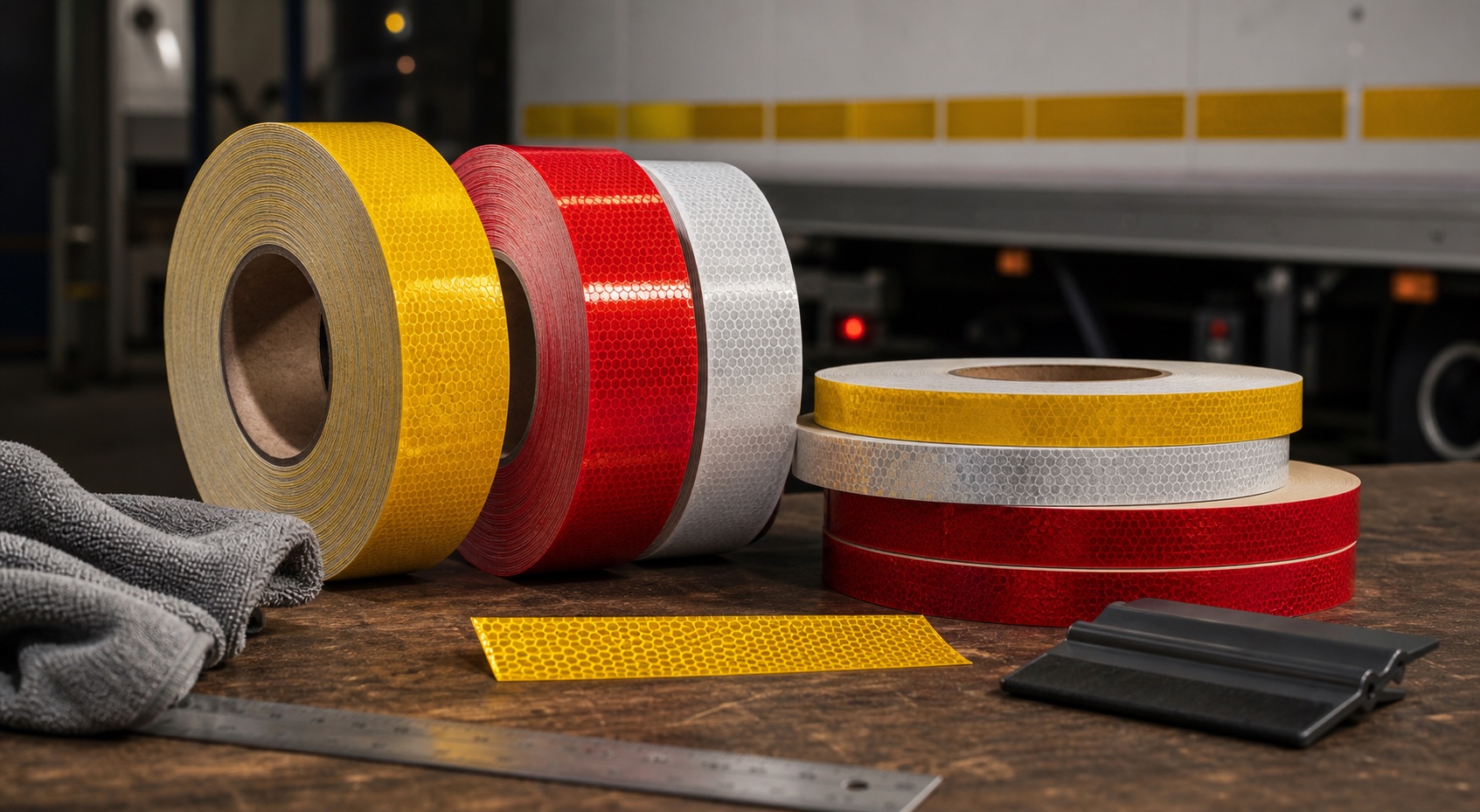
Frequently asked
For contour marking, class C is the norm. A lower class is not compliant for this purpose.
Approved class C tape retains its performance for years, provided it is applied and maintained correctly.